

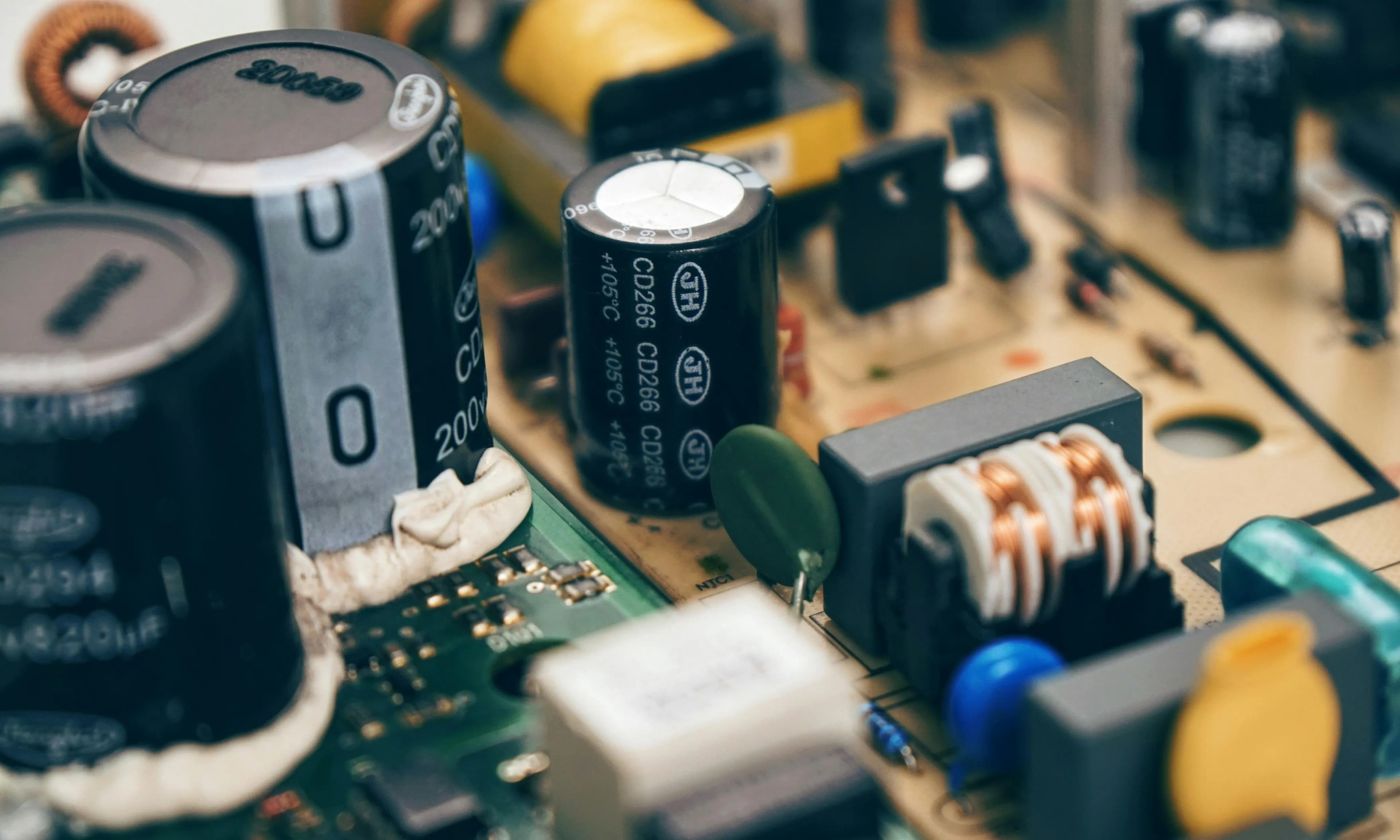
Using Logic ICs
Logic ICs (TTL and CMOS families) let you build boolean decision-making into your circuits: AND, OR, NOT, and more. The differences matter: TTL parts often want certain input voltages and current, while CMOS benefits from clean, stable supply rails and is more tolerant of lower power designs. Always check the supply voltage on the datasheet before powering an IC.
What you’ll learn: the key differences between TTL and CMOS, why pull-ups/pull-downs matter, and safe wiring practices for logic chips.
Parts list
- 74HC series logic IC (e.g., 74HC08 for AND)
- Breadboard and jumper wires
- Switches or jumpers for inputs
- LED and current-limiting resistor for output
- 0.1 µF decoupling capacitor
Floating inputs are a common beginner trap — an input left unconnected can pick up noise and behave unpredictably. Use pull-up or pull-down resistors (10 kΩ is a good starting point) to keep inputs in a known state when switches are open.
Hands-On Mini Task: wire a single gate from a 74HC series chip on a breadboard, use switches as inputs, and an LED for the output. Try every input combination and observe the truth table in action.
Diagram: 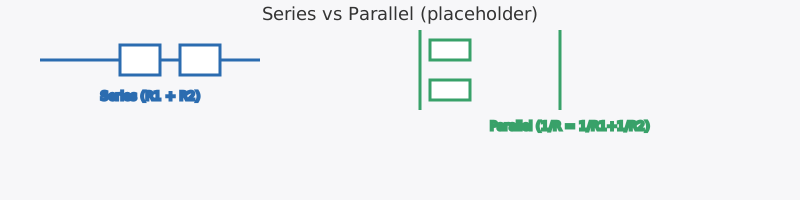
Troubleshooting: verify Vcc and GND first, add decoupling capacitors, and avoid connecting outputs together directly. If an IC gets warm quickly, disconnect power and re-check wiring.
Navigation
- Previous: Integrated Circuits
- Next: Introduction to Microcontrollers