

Learn2026-01-14
EMI and EMC Basics
#electronics#emi#emc
Overview
This chapter explains common sources of radiated and conducted emissions and practical techniques to reduce EMI and ensure EMC compliance at the board level.
Prerequisites
- Basic PCB layout knowledge and signal routing experience
Learning objectives
- Identify typical EMI sources on a board and their coupling mechanisms
- Apply filtering, shielding, and grounding strategies to reduce emissions
- Prepare a design for basic pre‑compliance checks
Tools & materials
- Spectrum analyser (or pre‑compliance tool), oscilloscope with broadband probe, basic shield materials
Hands-On Mini Task
- Measure a switching regulator's radiated noise with a near‑field probe or improvised loop and identify dominant noise bands.
- Add input/output LC filtering, a PCB ground pour, and common-mode choke where appropriate; re-measure and compare.
Expected result: reduced peak emissions in measured bands and a clear understanding of which mitigation steps were most effective.
Sources and coupling mechanisms
- Switching nodes: fast edges create broad-spectrum radiated emissions.
- Loops and cables: act as antennas for radiated and conducted emissions.
- Common-mode currents: can couple into chassis and cables causing long-range interference.
Mitigation techniques
- Minimise loop area: place decouplers and route returns to reduce emitted fields.
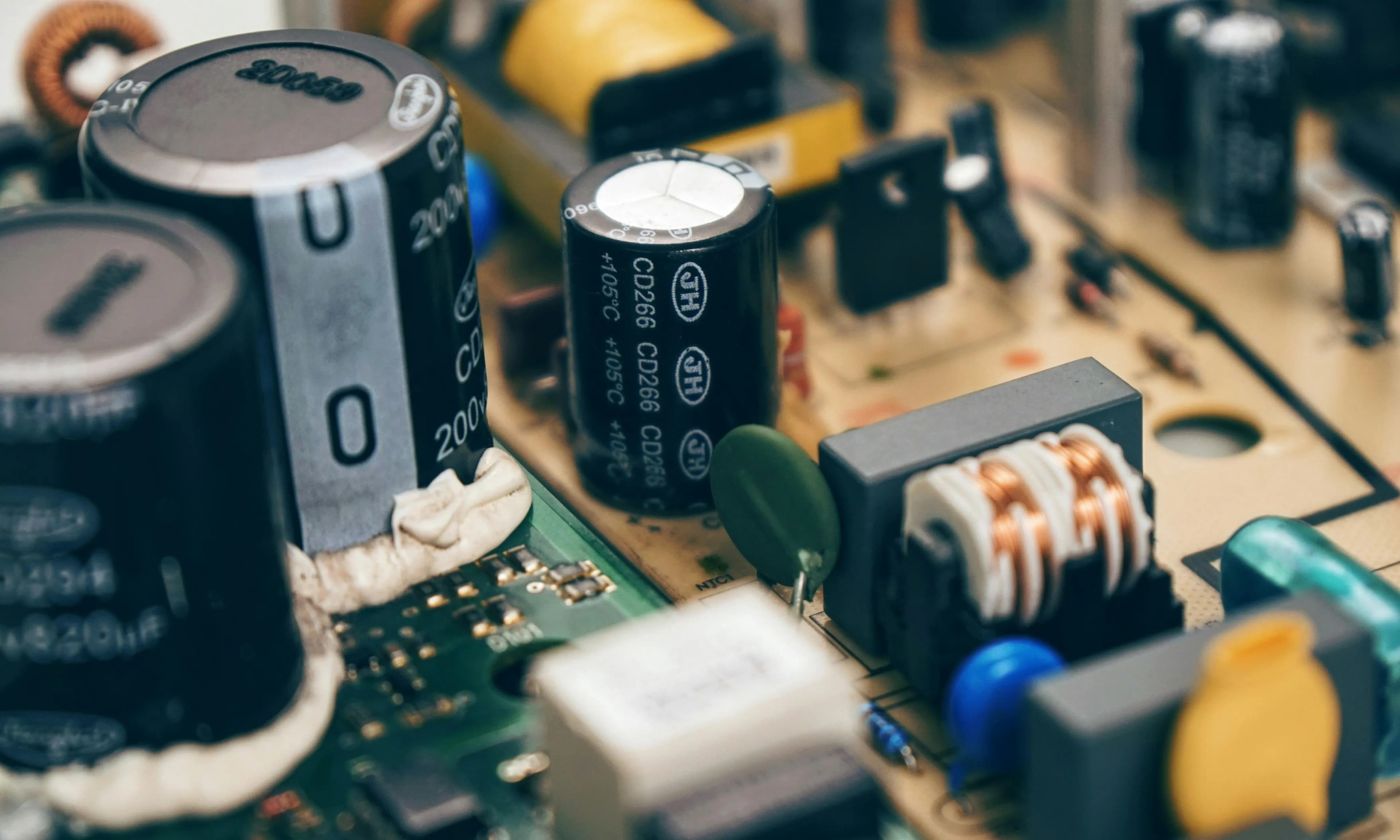
- Filtering: use LC input/output filters and common-mode chokes for cable interfaces.
- Shielding: enclosures and gaskets for sensitive circuits or emissions-critical components.
Pre-compliance checks
- Use a near-field probe and a spectrum analyser to find hotspots before formal testing.
- Test cables and connectors as part of the setup; fix conducted issues early with series ferrites.
Worked example — reducing switching regulator emissions
- Measure baseline with near-field probe; identify dominant frequency bands.
- Add a common-mode choke on the input and a Pi filter on the output; place X/Y capacitors where appropriate.
- Re-measure and compare spectra; document improvements and remaining peaks for targeted work.
Troubleshooting
- If adding filters causes instability, revisit regulator compensation and loop stability.
- Excessive emissions from connectors often indicate poor grounding or cable routing; re-route and add common-mode suppression.
Navigation
- Previous: PCB Layout and Practical Design
- Next: Power Supply Design