

Learn2026-01-14
Power Supply Design
#electronics#power#psu
Overview
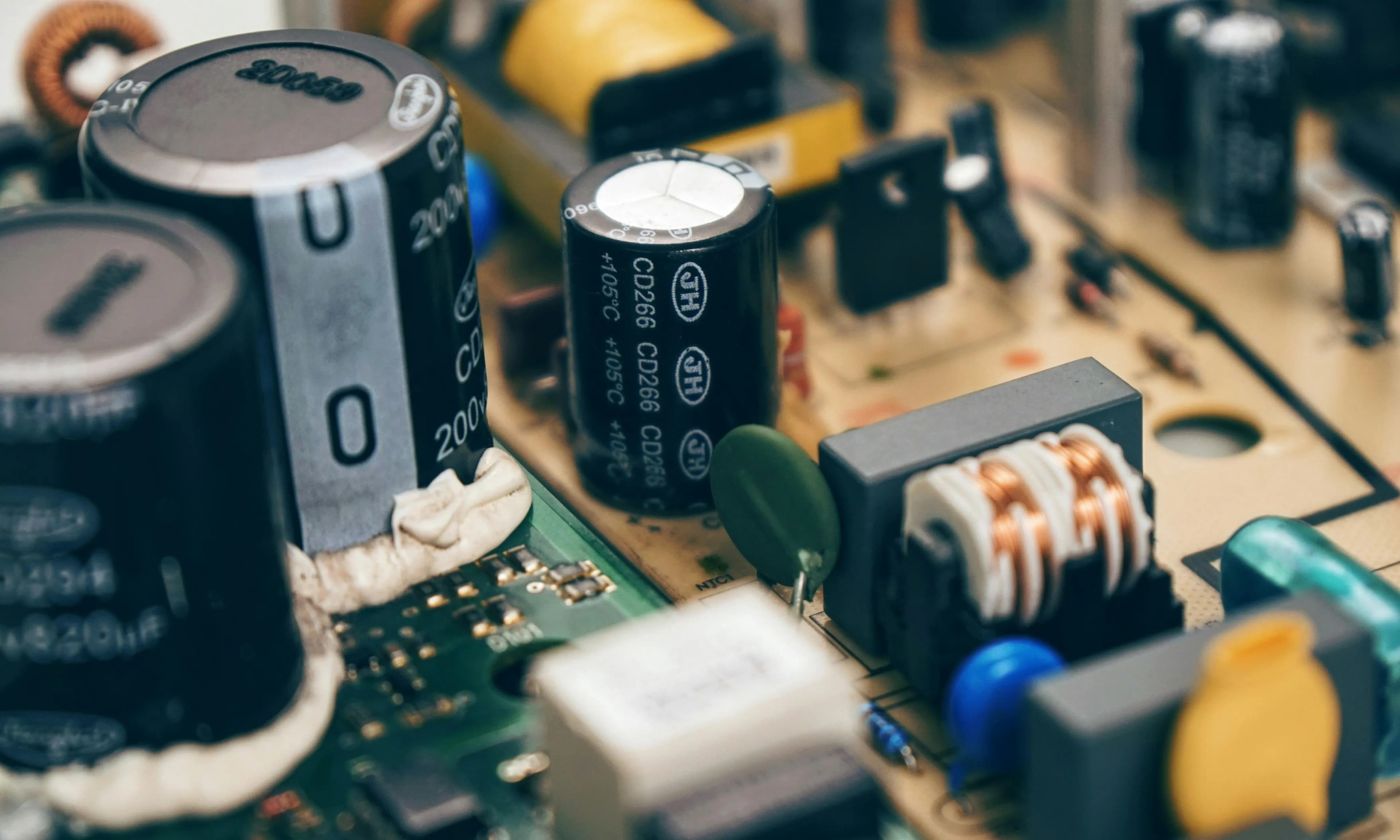
Power rails and supplies are the backbone of any system. This chapter covers selection of linear vs switching regulators, power partitioning, decoupling strategies, protection, and thermal considerations for power components.
Prerequisites
- Familiarity with passive components and basic circuit analysis
Learning objectives
- Choose appropriate regulator topologies for given load requirements
- Apply decoupling, bulk capacitance, and protection to maintain stable rails
- Consider thermal and mechanical constraints for power components
Tools & materials
- Bench supply, oscilloscope, thermal probe or IR camera, load resistors or electronic load
Hands-On Mini Task
- Design a simple board power section using a linear regulator and a switching regulator for different sub-systems. Add decoupling and bulk capacitors and implement reverse-polarity protection.
- Measure regulator output ripple and thermal rise under load.
Expected result: stable outputs with documented ripple and acceptable temperature rise for chosen components.
Linear vs switching
- Linear regulators (LDOs): simple, low-noise, but inefficient for large voltage drops and high currents.
- Switching regulators: higher efficiency, require attention to layout and filtering to control noise.
Decoupling and bulk capacitance
- Use a mix of ceramics (for high-frequency decoupling) and electrolytic/tantalum for bulk energy storage.
- Understand ESR/ESL tradeoffs: some regulators require specific ESR ranges to remain stable.
Protection strategies
- Reverse-polarity protection: series diode or ideal diode controllers.
- Inrush limiting: NTC or soft‑start circuits to avoid surge currents.
- Over-current and thermal shutdown: select components with safe operating area and consider fuses or polyfuses for protection.
Thermal considerations
- Calculate power dissipation (P = (Vin - Vout) × I for linear; P_loss in switching depends on efficiency) and estimate temperature rise using θJA.
Worked example — designing a 5 V rail for digital logic
- Select regulator topology based on efficiency and noise requirements.
- Choose decoupling network: 0.1 µF close to IC pins, 10 µF bulk near regulator output.
- Verify ripple with oscilloscope and thermal rise under expected load.
Troubleshooting
- If a regulator oscillates, try adding output ESR or follow datasheet recommended compensation network.
- High ripple may indicate poor bypassing or ground-return layout; re-evaluate decoupling placement.
Navigation
- Previous: EMI and EMC Basics
- Next: Switching Regulators and Control